How to Plan a Room Layout with Graph Paper
Moving furniture is heavy work, and discovering that your new sofa doesn't fit after you've already hauled it upstairs is the kind of mistake you only make once. Graph paper lets you test every arrangement at your desk before you lift a single piece. This guide walks you through the entire process: measuring your room, drawing a scale floor plan, creating furniture templates, and testing layouts until you find the one that works.
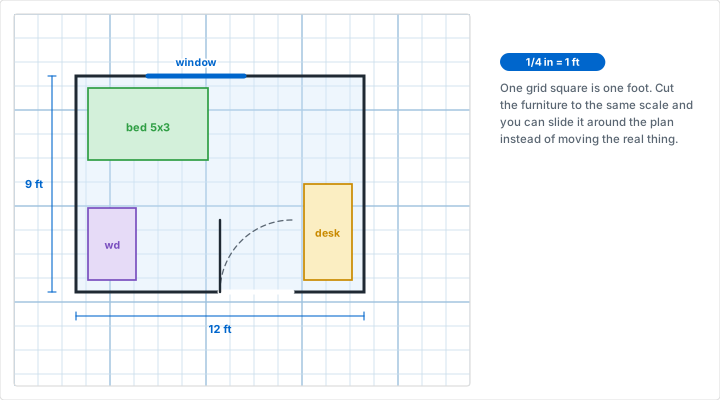
Why Graph Paper for Room Planning?
Advantages Over Guessing and Eyeballing
- Accurate scale: Each grid square represents a real measurement, so furniture that fits on paper will fit in the room
- No heavy lifting: Rearrange furniture by sliding paper cutouts instead of dragging real pieces across the floor
- See the whole room: A floor plan reveals spatial relationships that are hard to judge while standing inside the space
- Test multiple layouts: Try five arrangements in ten minutes instead of five hours
- Catch problems early: Spot blocked doorways, tight walkways, and wasted space before committing
Advantages Over Digital Apps
- No learning curve: Pencil, ruler, scissors, and the grid -- you already know how to use them
- Physical furniture pieces: Sliding paper cutouts around a floor plan is more intuitive than dragging icons on a screen
- Quick annotation: Jot measurements, notes, and ideas directly on the plan
- No subscription: Print fresh sheets whenever you need a new plan
- Works offline: Plan at the kitchen table, in the room itself, or at the furniture store
Which Grid Style?
Standard square grid (lines) is the best choice for room planning. The grid lines serve as direct measurement references when drawing walls and furniture to scale. Dot grid is a good alternative if you prefer a cleaner look for the finished plan.
Step 1: Choose Your Scale
The scale determines how much real-world space each grid square represents. For room planning, you want the entire room to fit on one sheet while keeping furniture pieces large enough to label and move around.
Recommended Scales
For Small Rooms (under 150 sq ft) -- Bathrooms, Closets, Nooks
- 1 square = 3 inches (7.5 cm): High detail for tight spaces where every inch matters
- 1 square = 6 inches (15 cm): Good balance for small bedrooms and home offices
For Standard Rooms (150-400 sq ft) -- Bedrooms, Living Rooms, Kitchens
- 1 square = 6 inches (15 cm): Shows individual cushions and drawer pulls if needed
- 1 square = 1 foot (30 cm): The most popular choice -- fits most rooms on a single sheet with clear furniture outlines
For Large Rooms and Open Floor Plans (400+ sq ft)
- 1 square = 1 foot (30 cm): Still works if you use larger paper (Tabloid or A3)
- 1 square = 2 feet (60 cm): Fits open-concept spaces on standard US Letter or A4 paper
Grid Size Tip
Use the graph paper generator to match your scale. For a 1 square = 1 foot scale on US Letter paper, try 1/4-inch grid spacing. That gives you a room area of roughly 32 x 22 feet per sheet. Need more room? Print on Tabloid (11x17) paper or tape two sheets together. See our grid size selection guide for more detail.
Step 2: Measure Your Room
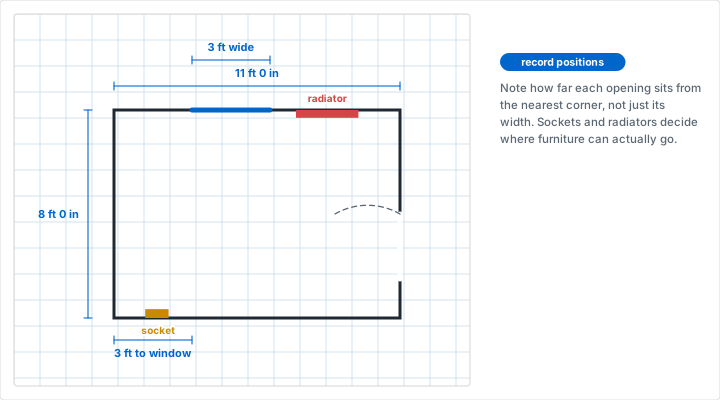
Accurate measurements are the foundation of a useful floor plan. Take your time here -- a measurement error of even a few inches can make a tight layout impossible.
What to Measure
- Wall lengths: Measure each wall at floor level from corner to corner
- Doors: Width of the opening, which side the hinges are on, and how far the door swings into the room
- Windows: Width, distance from each adjacent wall, and height of the sill from the floor
- Closets and alcoves: Depth and width of any recesses
- Fixed features: Radiators, fireplaces, built-in shelving, columns, outlets, and light switches
- Ceiling height: Not needed for the floor plan, but note it for tall furniture like bookshelves and armoires
Measuring Tips
- Use a metal tape measure, not a fabric one -- it stays straighter over long distances
- Measure twice, write down immediately -- don't trust your memory
- Record measurements in the same unit (all inches or all centimeters) to avoid conversion mistakes
- Measure from baseboard to baseboard if applicable -- that's the actual usable space
- Note any irregularities: walls that aren't perfectly straight, corners that aren't 90 degrees
Step 3: Draw Your Floor Plan
With measurements in hand, you're ready to draw. Start with the room shell before adding any furniture.
Drawing the Room Shell
- Write your scale in the corner of the page (e.g., "1 square = 1 foot")
- Draw the outer walls as thick lines, counting grid squares carefully for each wall length
- Mark doors with a gap in the wall line and an arc showing the swing direction
- Mark windows with a double line or a gap with tick marks at each end
- Add fixed features: Draw radiators, fireplaces, built-ins, and columns as shaded rectangles
- Mark electrical outlets with small circles along the wall -- you'll need these when placing lamps, TVs, and desks
- Add a compass direction if natural light matters for your layout (especially for home offices and reading areas)
Door Swing Matters
Draw the arc of each door swing on your plan. A door that swings 90 degrees into the room creates a zone where you can't place furniture. Forgetting this is one of the most common room planning mistakes -- the plan looks perfect until you realize you can't open the bedroom door.
Step 4: Create Furniture Templates
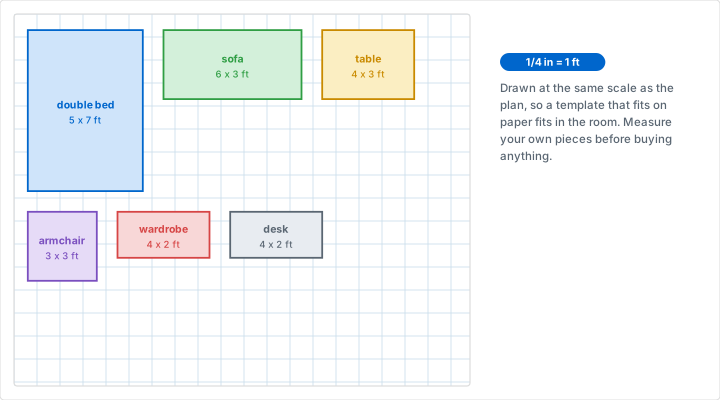
This is where graph paper room planning really shines. Instead of drawing furniture directly onto your plan (and erasing repeatedly), cut out scaled paper pieces for each item you want to place.
How to Make Templates
- Print a second sheet of graph paper at the same scale as your floor plan
- Draw each piece of furniture as a rectangle (or approximate shape) using real measurements
- Label each piece (e.g., "Sofa 84x36", "Desk 60x30")
- Cut them out with scissors
- Slide them around on your floor plan to test arrangements
Common Furniture Dimensions
If you don't have a specific piece yet (shopping for a new couch, for example), use these standard dimensions to see what will fit. All measurements are length x depth.
Living Room
- 3-seat sofa: 84 x 36 inches (7 x 3 feet)
- Loveseat: 60 x 34 inches (5 x 2.8 feet)
- Armchair: 36 x 34 inches (3 x 2.8 feet)
- Coffee table: 48 x 24 inches (4 x 2 feet)
- End table: 24 x 24 inches (2 x 2 feet)
- TV stand/console: 60 x 18 inches (5 x 1.5 feet)
- Bookcase: 36 x 12 inches (3 x 1 foot)
Bedroom
- King bed: 76 x 80 inches (6.3 x 6.7 feet) -- add 6 inches per side for bedding overhang
- Queen bed: 60 x 80 inches (5 x 6.7 feet)
- Full/Double bed: 54 x 75 inches (4.5 x 6.25 feet)
- Twin bed: 38 x 75 inches (3.2 x 6.25 feet)
- Nightstand: 24 x 18 inches (2 x 1.5 feet)
- Dresser: 60 x 18 inches (5 x 1.5 feet)
Home Office
- Standard desk: 60 x 30 inches (5 x 2.5 feet)
- Small desk: 48 x 24 inches (4 x 2 feet)
- L-shaped desk: 60 x 60 inches with 24-inch depth on each wing
- Office chair: 24 x 24 inches (allow 36 inches deep for pushback)
- Filing cabinet: 15 x 28 inches (allow 24 inches in front for drawer clearance)
- Bookshelf: 36 x 12 inches (3 x 1 foot)
Dining Room
- Rectangular table (seats 6): 72 x 36 inches (6 x 3 feet)
- Rectangular table (seats 4): 48 x 30 inches (4 x 2.5 feet)
- Round table (seats 4): 42-inch diameter (3.5 feet)
- Dining chair: 18 x 20 inches (1.5 x 1.7 feet)
- Buffet/sideboard: 60 x 18 inches (5 x 1.5 feet)
Step 5: Plan for Traffic Flow
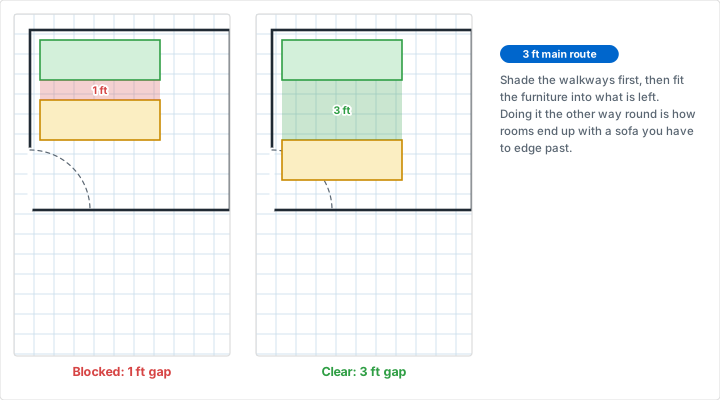
A room layout isn't just about fitting furniture in -- it's about moving through the space comfortably. Before finalizing any arrangement, check these clearance guidelines.
Minimum Clearances
- Main walkways: 36 inches (3 feet) -- the path people use to cross the room
- Secondary paths: 24 inches (2 feet) -- space to squeeze past furniture
- In front of a sofa: 18 inches between sofa and coffee table (enough to sit down and stand up)
- Behind dining chairs: 36 inches from table edge to wall (so people can push back and stand)
- In front of a dresser: 36 inches for open drawers
- Desk chair pushback: 36 inches from desk edge to any wall or obstacle behind
- Door swing clearance: The full arc of every door must remain unobstructed
- Closet access: 36 inches in front of closet doors (48 inches for bifold doors that open wide)
Marking Traffic Paths
After placing your furniture templates, use a colored pencil to draw the main walking routes through the room:
- Draw a path from the main entrance to every key destination (bed, desk, sofa, closet)
- Check that every path is at least 24 inches wide, preferably 36
- Look for bottlenecks where two paths cross in a tight area
- Verify that no path requires someone to walk around three sides of the bed just to reach the closet
Step 6: Test Your Layouts
With your room shell drawn and furniture templates cut out, it's time to experiment. This is the fun part -- and the reason graph paper beats every other method.
Layout Strategy by Room Type
Living Room
- Start with the largest piece (usually the sofa) and anchor it first
- Create a conversation zone: Arrange seating so people face each other, with no seat more than 8 feet from another
- Orient toward the focal point: Fireplace, TV, or a large window
- Float furniture: Pulling the sofa away from the wall creates a more inviting room and can define traffic paths behind it
- Balance visual weight: If a large sofa sits on one side, place a bookcase or two chairs on the opposite side
Bedroom
- Place the bed first: It's the largest piece and the room's purpose
- Center the bed on a wall when possible, ideally the wall opposite the door or the wall with the most uninterrupted length
- Leave walking space: At least 24 inches on each side you need to access (both sides for a shared bed)
- Position nightstands before the dresser -- they're used more frequently
- Keep the closet path clear: Don't place the dresser where it blocks the closet doors
Home Office
- Position the desk for light: Perpendicular to windows reduces screen glare while keeping natural light available
- Check outlet locations: Your desk needs to be near power outlets for monitors, lamps, and chargers
- Face the door if possible: Being able to see the entrance reduces startling interruptions
- Allow chair movement: Mark the full range your chair rolls -- at least 36 inches behind the desk
- Separate work zones: If the office doubles as a guest room, use the layout to visually separate the desk area from the sleeping area
Dining Room
- Center the table: Leave equal clearance on all sides where people sit
- Allow 24 inches of table width per person -- a 72-inch table seats 6 (3 per long side)
- Leave 36 inches from table edge to wall for chair pushback
- Position the buffet against the nearest wall to the kitchen for easy serving access
The Multi-Layout Method
Don't settle on the first arrangement that works. Try at least three different layouts:
- Conventional: Furniture against walls, open center
- Floating: Furniture pulled away from walls, creating zones
- Diagonal: Bed or desk angled in a corner (uses more space but can feel more dynamic)
Photograph each layout on your graph paper plan so you can compare them side by side later.
Step 7: Refine and Finalize
Once you've found a layout that handles traffic flow, fits all your furniture, and feels balanced, it's time to polish the plan.
Final Checklist
- Every door (including closet doors) opens fully without hitting furniture
- Every drawer and cabinet opens with clearance to walk past
- At least one electrical outlet is accessible for each area that needs power
- Light switches aren't blocked behind open doors or tall furniture
- The TV is positioned at a comfortable viewing distance (typically 1.5 to 2.5 times the screen's diagonal measurement)
- Windows aren't blocked by tall furniture if you want natural light and airflow
- Heating vents and radiators aren't covered by furniture
- There's a clear path from the bed to the bathroom door (for midnight trips)
Adding Finishing Details to Your Plan
- Label every piece with its name and key dimension
- Note distances between pieces where clearance is tight
- Mark rug placement if you plan to use area rugs (front legs of seating should sit on the rug)
- Indicate lighting: Mark where floor lamps, table lamps, and overhead fixtures land in the layout
- Add art and decor notes: Mark wall space available for shelving, mirrors, or artwork
Practical Examples
Example 1: 12 x 14 Foot Bedroom (Queen Bed)
Using 1 square = 1 foot on your graph paper, draw a 12 x 14 rectangle. A sample layout:
- Bed (5 x 7 feet): Centered on the 14-foot wall opposite the door, headboard against the wall
- Nightstands (2 x 1.5 feet each): One on each side of the bed, leaving 2 feet between each nightstand and the side walls
- Dresser (5 x 1.5 feet): Against the wall to the left of the door, with 3 feet of clearance in front for drawers
- Walking paths: 2.5 feet on each side of the bed, 3 feet at the foot of the bed to the opposite wall
- Remaining wall space: 4 feet of open wall beside the dresser for a full-length mirror
Example 2: 16 x 20 Foot Living Room
Using 1 square = 1 foot on Tabloid paper, draw a 16 x 20 rectangle. A sample layout:
- Sofa (7 x 3 feet): Floating 2 feet from the long wall, facing the TV wall
- TV console (5 x 1.5 feet): Centered on the opposite long wall
- Coffee table (4 x 2 feet): Centered in front of the sofa, 18 inches away
- Two armchairs (3 x 3 feet each): Flanking the sofa at 90 degrees, creating a U-shaped conversation area
- End tables (2 x 2 feet): Between each armchair and the sofa
- Bookcase (3 x 1 foot): Against the short wall near the entrance
- Traffic path: 4-foot clear lane behind the sofa connecting the room's two doorways
Example 3: 10 x 10 Foot Home Office
Using 1 square = 6 inches for extra detail (so the room is 20 x 20 squares), draw the room with a window on one wall and the door on the adjacent wall:
- L-shaped desk (5 x 5 feet, 2-foot depth): In the corner, one wing along the window wall (perpendicular to the light) and one along the adjacent wall
- Office chair: In the corner of the L, with 3 feet of pushback space
- Bookshelf (3 x 1 foot): On the wall opposite the desk
- Filing cabinet (1.25 x 2.3 feet): Under the desk wing, within arm's reach of the chair
- Small reading chair (2.5 x 2.5 feet): In the remaining corner, with a floor lamp beside it
Tips for Better Room Plans
Pencil First, Ink Later
Draw your room shell in pencil first. Once you've verified all measurements, go over the walls in pen or dark marker. Keep the interior in pencil so you can erase and adjust. Your furniture templates should stay as movable cutouts -- don't glue them down until you're certain about the final arrangement.
Make a Template Library
If you're planning multiple rooms, cut out all your furniture templates at once and store them in a small envelope or ziplock bag. Label each piece clearly. This lets you move items between room plans easily -- "What if we put the bookshelf in the office instead of the living room?"
Use Color Coding
Color helps a floor plan communicate more information at a glance:
- Blue: Windows and water features (sinks, radiators)
- Red: Electrical outlets and switches
- Green: Traffic paths and clearance zones
- Yellow: Natural light areas (useful for desk and reading chair placement)
- Gray: Fixed features you can't move (columns, fireplaces, built-ins)
Print Multiple Copies
Use the graph paper generator to print several copies of the same grid. Draw your room shell on one, then trace or photocopy it so you have multiple blanks to test different arrangements without redrawing the walls each time.
Common Challenges and Solutions
Challenge: Room Doesn't Fit on One Sheet
Problem: Your room is too large for a single page at a useful scale.
Solution: Print on Tabloid or A3 paper for nearly double the area, or tape two sheets together with their grids aligned. Alternatively, use a 1 square = 2 feet scale to fit larger rooms on standard paper.
Challenge: Irregular Room Shape
Problem: The room has bay windows, angled walls, alcoves, or an L-shape.
Solution: Draw the largest rectangular portion first, then add extensions or subtract cutouts. For angled walls, approximate the angle using the grid -- a 45-degree wall cuts diagonally across squares. Note "angled wall" and the actual measurement on your plan.
Challenge: Furniture Is Too Big for the Room
Problem: When you draw everything to scale, the king bed and two nightstands leave no walking space.
Solution: This is exactly the kind of problem graph paper is meant to catch before you buy or move furniture. Options: downsize to a queen bed, use one nightstand instead of two, switch to a wall-mounted shelf in place of a nightstand, or measure for a narrower dresser. The graph paper tells you exactly how many inches you need to reclaim.
Challenge: Can't Visualize Height
Problem: A floor plan is two-dimensional, but a tall bookshelf blocking a window is a three-dimensional problem.
Solution: Add a side-view elevation drawing on a separate sheet. Draw one wall at a time, showing furniture heights against the wall. Mark window sill heights and the tops of furniture to check for conflicts. For this kind of technical drawing, engineering graph paper with its heavier ruling lines at regular intervals is particularly useful.
Beyond the Single Room
Whole-Home Planning
The same technique scales to an entire apartment or house. Use a smaller scale (1 square = 2 feet) to map your full floor plan on a single sheet, then create detailed per-room plans at a larger scale (1 square = 6 inches or 1 foot) for furniture placement.
Rooms Full of People
The same drawing works when the thing being arranged is people rather than furniture. A seating chart on graph paper is a floor plan whose furniture happens to be tables and desks, and whose real constraint is the aisle between them -- useful for a classroom, a wedding reception, or a conference room you have to seat twice in one day.
Moving Day Preparation
A finished room plan is a moving day tool. Give copies to your movers or helpers so they know exactly where each piece goes. Label each room's plan and tape it to the door. This eliminates the "just put it anywhere for now" chaos that leads to weeks of disorganization.
Renovation Planning
If you're planning a renovation, draw both the "before" and "after" floor plans. The before plan documents what you have; the after plan shows what you want. Contractors, electricians, and plumbers all work from floor plans -- your graph paper sketch gives them a clear starting point for professional drawings.
Conclusion
Planning a room layout on graph paper takes thirty minutes. Rearranging furniture by trial and error takes an entire afternoon and a sore back. The grid keeps your dimensions honest, the furniture cutouts let you iterate freely, and the finished plan gives you confidence that everything will fit before you commit.
Keep your floor plans after you finish arranging. They're useful when you want to rearrange later, when you're shopping for new furniture and need to know the maximum size that will fit, or when someone asks "is there room for a desk in the guest bedroom?" You already have the answer on paper.
Ready to Plan Your Room?
Generate custom graph paper at the perfect scale for your floor plan. Try 1/4-inch grid on US Letter for a standard 1 square = 1 foot room layout.
Create Graph Paper NowRelated Resources
- How to Choose the Right Grid Size
- Paper Sizes Explained
- Professional Printing Tips
- Graph Paper Use Cases
- Garden Planning on Graph Paper
- How to Make a Seating Chart -- the same plan, arranged around people
- Design Sketching Techniques
- Isometric Graph Paper Guide
- Woodworking and DIY Project Plans on Graph Paper
- Gingerbread House Templates on Graph Paper: two scales on one project, and how to keep them apart
- All graph paper tutorials