Planning Your Garden on Graph Paper: The Complete Guide
A well-planned garden starts on paper. Whether you're mapping a backyard vegetable plot, designing a perennial border, or laying out raised beds, graph paper gives you the structure to draw accurate, to-scale layouts before you ever break ground. This guide walks you through every step of garden planning on graph paper, from choosing a scale and measuring your space to mapping companion plants and tracking seasonal rotations.
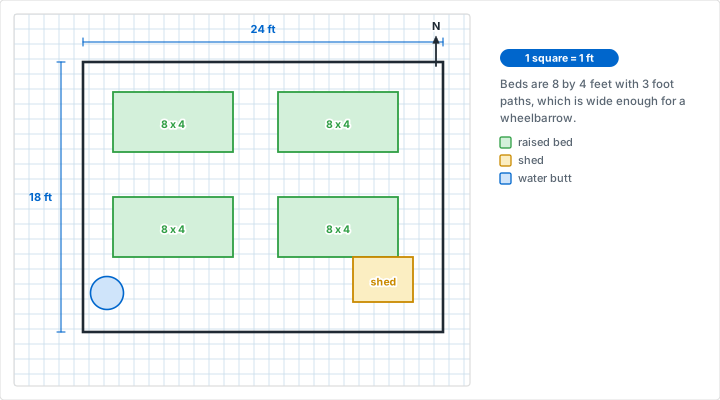
Why Graph Paper for Garden Planning?
Advantages Over Freehand Sketches
- Accurate scale: Each grid square represents a real-world measurement, so your layout reflects actual distances
- Proper spacing: Easily count squares to ensure plants have the room they need to grow
- Straight lines: Paths, bed borders, and fence lines stay true without a ruler
- Easy revisions: Erase and redraw sections without starting over
- Measurable area: Calculate planting area, mulch coverage, or soil volume by counting squares
Advantages Over Digital Software
- Take it outside: Carry your plan into the garden while you measure and plant
- No learning curve: Just a pencil, a ruler, and the grid
- Quick annotation: Jot planting dates, notes, and observations directly on the map
- Tactile planning: Physically working through the layout helps you think spatially
- No subscription: Print fresh sheets whenever you need a new plan
Which Grid Style?
Standard square grid (lines) is the best choice for garden planning. It provides clear reference lines for drawing beds, paths, and structures to scale. Dot grid also works well if you prefer a cleaner look when adding color or annotations.
Step 1: Choose Your Scale
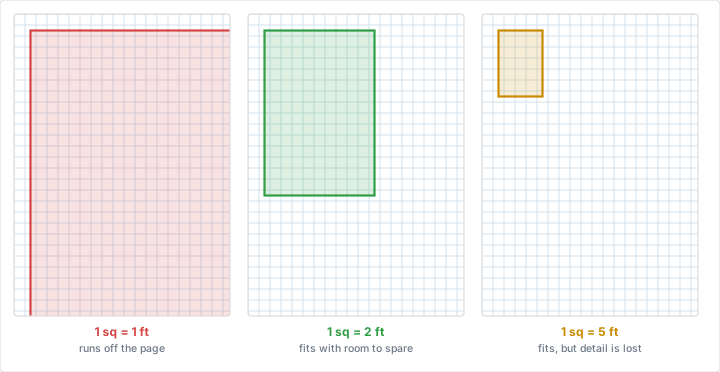
The scale determines how much real-world space each grid square represents. Pick a scale that lets your entire garden fit on one sheet while keeping individual plants distinguishable.
Recommended Scales
For Small Gardens and Raised Beds (under 200 sq ft)
- 1 square = 6 inches (15 cm): Best for detailed raised bed plans where you need to place individual plants
- 1 square = 1 foot (30 cm): Good balance of detail and coverage for small plots
For Medium Gardens (200-1,000 sq ft)
- 1 square = 1 foot (30 cm): Standard choice for most home vegetable gardens
- 1 square = 2 feet (60 cm): Fits larger plots on a single page
For Large Gardens and Homesteads (1,000+ sq ft)
- 1 square = 2 feet (60 cm): Shows the full layout at a glance
- 1 square = 4 feet (1.2 m): Overview scale for very large plots or whole-property plans
Grid Size Tip
Use our generator to match your scale to your grid spacing. For a 1 square = 1 foot scale, try 1/4-inch grid on US Letter paper. That gives you a garden area of roughly 32 x 22 feet per sheet. Need more space? Print on Tabloid (11x17) paper or tape multiple sheets together.
Step 2: Measure and Map Your Space
Before drawing plants, map the permanent features of your garden. This base map stays the same year to year and serves as the foundation for seasonal plans.
What to Measure
- Property boundaries: Overall dimensions of the area you'll garden in
- Structures: House walls, sheds, fences, and gates
- Existing trees and shrubs: Mark trunk location and approximate canopy spread
- Paths and hardscape: Walkways, patios, driveways
- Utilities: Water spigots, hose bibs, irrigation lines, electrical outlets
- Sun and shade: Note which areas get full sun, partial shade, or full shade
Drawing the Base Map
- Write your chosen scale in the corner of the page (e.g., "1 square = 1 foot")
- Draw your property outline first, counting squares carefully
- Add structures as solid rectangles — shade them in so they stand out
- Mark existing trees with a circle sized to their canopy spread
- Draw paths as parallel lines with hatching or a different color
- Label compass direction (North arrow) so you can assess sun exposure
- Mark water sources with a small circle or "W"
Marking Sun Exposure
Sun mapping is critical for plant placement. Use colored pencils or a simple letter code:
- F = Full sun (6+ hours direct sunlight)
- P = Partial shade (3-6 hours direct sunlight)
- S = Full shade (under 3 hours direct sunlight)
Observe your garden at different times of day and note where shadows fall from buildings, trees, and fences. Lightly shade these areas on your base map.
Step 3: Design Your Garden Beds
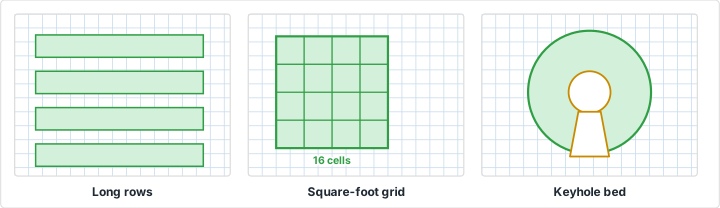
Raised Beds
Graph paper is ideal for raised bed layouts because standard bed dimensions translate neatly to grid squares.
Common Raised Bed Sizes
- 4 x 4 feet: Compact, accessible from all sides — perfect for beginners
- 4 x 8 feet: The most popular size, fits neatly against a fence or walkway
- 4 x 12 feet: Maximum length while still reaching the center from either side
- 2 x 8 feet: Narrow beds for against walls or for children's gardens
At a 1 square = 1 foot scale, a 4x8 bed is simply a 4x8 rectangle on your grid. Leave at least 2-3 squares (feet) between beds for walking paths.
Square Foot Gardening
The popular square foot gardening method maps perfectly to graph paper. Each 1-foot square is a planting cell. At a 1:1 scale, you can draw the subdivisions directly:
- 1 plant per square: Tomatoes, peppers, broccoli, cabbage
- 4 plants per square: Lettuce, Swiss chard, large herbs
- 9 plants per square: Bush beans, spinach, beets, turnips
- 16 plants per square: Carrots, radishes, onions
In-Ground Beds and Rows
For traditional row gardens, use the grid to space rows evenly:
- Draw bed borders as rectangles
- Mark rows as lines within the bed, spaced according to plant requirements
- Use dots or X marks along each row to indicate individual plant positions
- Label each row with the crop name and variety
Paths and Access
- Main paths: 3-4 feet wide (for a wheelbarrow)
- Secondary paths: 18-24 inches (for walking between beds)
- Stepping stones: Mark individual stones along less-used routes
Step 4: Plan Your Plantings
Using a Plant Spacing Reference
Before placing plants on your map, you need to know how much space each one requires. Keep a reference list next to your graph paper with the spacing for each crop you plan to grow. Common examples:
Vegetables
- Tomatoes: 24-36 inches apart (2-3 squares at 1 ft scale)
- Peppers: 18-24 inches apart
- Lettuce: 6-12 inches apart
- Carrots: 2-3 inches apart within rows, rows 12 inches apart
- Squash/Zucchini: 36-48 inches apart
- Bush beans: 4-6 inches apart, rows 18-24 inches apart
- Cucumbers (trellised): 12 inches apart along trellis
- Corn: 12 inches apart in blocks (not single rows)
Herbs
- Basil: 12-18 inches apart
- Parsley: 6-9 inches apart
- Rosemary: 24-36 inches apart
- Thyme: 12-24 inches apart
Color Coding Your Plan
Using colored pencils makes your garden plan much easier to read at a glance. Here's a suggested color scheme:
- Green: Leafy greens (lettuce, spinach, kale)
- Red: Fruiting crops (tomatoes, peppers, strawberries)
- Orange: Root vegetables (carrots, beets, sweet potatoes)
- Yellow: Squash family (zucchini, cucumber, pumpkin)
- Purple: Brassicas (broccoli, cabbage, cauliflower)
- Blue: Herbs
- Brown: Structures and hardscape
Creating a Plant Key
Add a legend in the margin of your plan. For each crop, show:
- The color or symbol you're using
- The crop name and variety
- Spacing requirements
- Days to harvest (helps with succession planning)
Step 5: Companion Planting Map
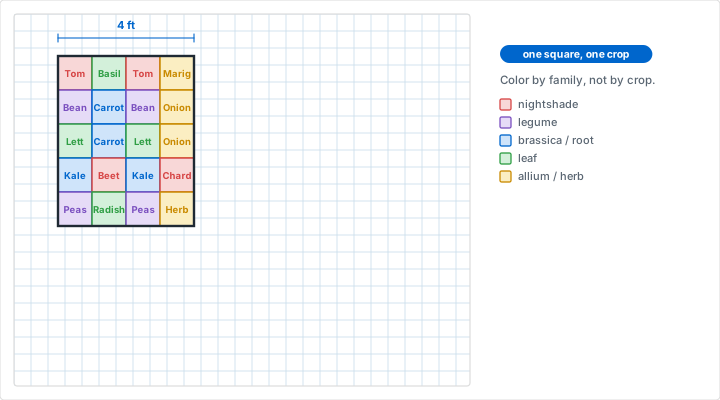
One of the biggest advantages of planning on graph paper is that you can check companion planting relationships before committing plants to the ground.
Good Neighbors
- Tomatoes + Basil: Basil may improve tomato flavor and repel certain pests
- Carrots + Onions: Onion scent deters carrot fly
- Corn + Beans + Squash: The classic "Three Sisters" — beans fix nitrogen, squash shades soil, corn provides a trellis
- Lettuce + Tall crops: Lettuce benefits from the shade of tomatoes or trellised cucumbers in summer
- Marigolds + Everything: Border plantings deter many common pests
Bad Neighbors
- Tomatoes + Brassicas: Tomatoes can stunt cabbage family growth
- Fennel + Most vegetables: Fennel inhibits growth of many nearby plants
- Onions + Beans/Peas: Alliums can stunt legume growth
- Dill + Carrots: Can cross-pollinate and produce bitter carrots
Mapping It Out
- After placing your crops on the grid, review each bed for bad neighbor conflicts
- Circle any problematic pairings with a red pencil
- Shuffle plant positions until no conflicts remain
- Add companion border plants (marigolds, nasturtiums) along bed edges
Step 6: Seasonal and Succession Planning
Your garden isn't static through the year. Use multiple copies of your base map to plan different seasons.
Multi-Season Approach
- Print 3-4 copies of your base map using the graph paper generator
- Label each copy: "Early Spring," "Summer," "Fall," and optionally "Winter"
- Draw different planting layouts on each sheet
- Track which beds change crops between seasons
Succession Planting
For crops you harvest and replant throughout the season, annotate your plan with planting dates:
- Write the sow date next to each crop marking
- Use arrows to show where a harvested crop gets replaced by the next planting
- Example: Peas (March) → Bush Beans (June) → Garlic (October)
Crop Rotation Tracking
Rotating crop families between beds each year prevents soil depletion and disease buildup. Keep your annual garden plans in a folder so you can reference what grew where last year.
Four-Year Rotation System
Divide your beds into four groups and rotate these plant families through them:
- Year 1: Legumes (beans, peas) — fix nitrogen in the soil
- Year 2: Brassicas (cabbage, broccoli, kale) — heavy feeders that use the nitrogen
- Year 3: Nightshades and Cucurbits (tomatoes, squash, peppers)
- Year 4: Root vegetables and Alliums (carrots, onions, garlic)
Number each bed on your graph paper plan and note which rotation year it's in. Next year, each bed moves to the next group.
Step 7: Add Vertical Elements and Structures
Gardens grow up, not just out. Mark vertical elements on your plan so you account for shade they cast and space they occupy.
What to Include
- Trellises: Draw as a thick line along the bed edge, note the height
- Arbors and arches: Mark the footprint and label the height
- Cages and stakes: Small circles or X marks at each plant
- Fencing: Draw as a dashed or dotted line
- Cold frames and row covers: Outline the area they protect
Shadow Planning
Place tall structures and plants on the north side of your garden (in the Northern Hemisphere) so they don't shade shorter crops. On your graph paper, mark a North arrow and position trellises, corn, and tall sunflowers accordingly.
Practical Examples
Example 1: 4x8 Raised Bed (Square Foot Method)
Using 1 square = 1 foot on your graph paper, draw a 4x8 rectangle. Subdivide into 32 one-foot cells. A sample planting:
- Row 1 (north end): 2 squares tomato, 2 squares tomato (staked)
- Row 2: 4 squares peppers (1 plant each)
- Row 3: 1 square basil (4 plants), 1 square parsley (4 plants), 2 squares lettuce (4 plants each)
- Row 4: 4 squares bush beans (9 plants each)
- Row 5: 2 squares carrots (16 each), 2 squares radishes (16 each)
- Row 6: 4 squares spinach (9 plants each)
- Row 7: 4 squares onions (16 plants each)
- Row 8 (south end): 4 squares marigold border (4 plants each)
Example 2: Full Backyard Garden (20 x 30 feet)
Using 1 square = 2 feet on US Letter paper gives you a 44x34 foot area to work with. Sketch the layout:
- Outline the 20x30 foot garden boundary (10x15 squares)
- Place a 4-foot main path down the center (2 squares wide)
- Draw four 4x8 raised beds, two on each side of the path
- Add an herb spiral in one corner (3-foot diameter circle)
- Mark a compost bin area at the back (4x4 feet)
- Add a rain barrel near the nearest downspout
- Draw trellis along the north fence for climbing crops
Tips for Better Garden Plans
Pencil First, Then Ink
Start all plans in pencil. Garden layouts change as you rethink spacing, move plants around, and adjust for companion planting. Once you're satisfied, go over the final lines in pen and add color.
Keep a Garden Journal Alongside Your Map
Your graph paper plan shows where things go. Pair it with a simple journal that records when and how: planting dates, weather notes, harvest amounts, pest observations. Together, these become invaluable references for planning next year's garden.
Print Multiple Copies
Use the graph paper generator to print several copies of the same grid. Use one for your base map, one for your spring plan, one for summer, and keep a blank spare. You can also print at different scales — a detailed close-up of a single bed alongside an overview of the whole garden.
Laminate Your Base Map
If you laminate your base map (the one with permanent features like beds, paths, and structures), you can use dry-erase markers to plan and re-plan each season on the same sheet.
Common Challenges and Solutions
Challenge: Garden Doesn't Fit on One Sheet
Problem: Your garden is too large for a single page at a useful scale.
Solution: Print on larger paper (Tabloid/A3), tape multiple sheets together, or create an overview map at a small scale (1 square = 4 feet) plus detailed bed maps at a large scale (1 square = 6 inches).
Challenge: Irregular Garden Shape
Problem: Your garden isn't a simple rectangle.
Solution: Outline the shape as closely as possible using the grid lines. Curved borders can be approximated by following grid lines in a staircase pattern, then smoothing the line freehand. Mark the approximate boundary clearly and note "actual shape is curved" if needed.
Challenge: Too Many Plants, Not Enough Space
Problem: When you map everything to scale, you realize you've planned for more plants than your space can hold.
Solution: This is exactly why you plan on graph paper — better to discover this now than after buying seedlings. Prioritize your must-have crops, use vertical growing (trellises) to maximize space, and consider succession planting so one crop replaces another through the season.
Challenge: Plan Looks Great but Doesn't Work in Reality
Problem: The layout seemed perfect on paper but the garden gets unruly.
Solution: Plants grow bigger than you expect. Always use the mature size for spacing, not the transplant size. After your first season, annotate your plan with what actually happened — which plants sprawled, which paths were too narrow. Use this feedback for next year's plan.
Conclusion
A few hours spent planning your garden on graph paper can save you weeks of frustration during the growing season. When every bed is drawn to scale, every plant is properly spaced, and companion planting is mapped out in advance, you walk into spring with confidence instead of guesswork. The grid keeps your planning honest — you can see at a glance whether your ambitions match your available space.
Keep your plans from year to year. They become a growing record of what works in your specific garden — which bed rotations produced the best harvests, which companion pairings thrived, and how your garden evolved over time. That stack of annotated graph paper plans might be the most valuable gardening tool you own.
Ready to Plan Your Garden?
Generate custom graph paper at the perfect scale for your garden. Try 1/4-inch grid on US Letter for a standard 1 square = 1 foot garden plan.
Create Graph Paper Now